





You’re seeing more traffic. Your campaigns are working. But customer acquisition costs are on the rise and your revenue is still flat.
The problem isn’t traffic. It’s the customer’s decision-making process.
Most Shopify stores struggle not because of a lack of visitors, but because visitors are not converting.
In this article, we’ll break down the five most common decision points where shoppers drop off and show you how to fix each one through effective conversion rate optimization.
Let’s dive in!
The hidden problem behind flat growth in Shopify stores
When growth seems to plateau despite more traffic and better campaigns, the issue isn’t necessarily about your marketing. It’s not about the number of visitors you’re bringing in. It’s about how effectively those visitors are making decisions on your site.
The hidden culprit? Friction. While you might be successfully driving more traffic, the journey from visitor to customer is often bogged down by subtle barriers that erode conversion rates.
These aren’t always obvious. Sometimes they’re invisible to both store owners and shoppers. Small misalignments in expectations, unclear messaging, or unaddressed anxieties can prevent customers from taking the final step toward a purchase.
For example, even though a visitor is interested in your products and engaged with your content, they might hesitate at critical decision-making moments due to confusion about shipping costs, lack of trust, or an overwhelming choice of options. These barriers prevent them from fully committing, and instead of closing the sale, they leave.
Most ecommerce stores lose revenue at the same critical points:
- when visitors aren’t ready yet,
- when they don’t see enough value,
- when they hesitate at the last moment,
- struggle to find the right product, or
- simply can’t make a clear decision.
These are predictable decision points where friction, uncertainty, or weak value perception can easily halt the buying process.
In the next sections, we’ll talk more about these common friction points in the Shopify journey and explain how conversion rate optimization can fix them, boosting your conversions without needing to pull in more traffic.
The 5 drop-off points in the Shopify customer journey
While every store is different, most conversion losses happen at the same moments in the buying process. Understanding these critical friction points is the first step toward fixing them and turning more visitors into customers.
1. The visitor isn’t ready yet
Most first-time visitors won’t buy during their first session. They’re still researching, comparing options, or deciding whether they trust your brand.
That’s not the problem. The real problem is losing them forever.
In most Shopify stores, friction at this stage happens for three reasons:
- the shopper is early in the decision process,
- doesn’t fully trust the brand yet, or
- simply isn’t ready to commit.
Here, the goal of CRO isn’t to push for an immediate purchase. It’s to capture the relationship before the visitor leaves and your acquisition cost is wasted.
Email or SMS capture turns anonymous traffic into owned audiences you can bring back later. The highest-performing setups go beyond simple forms.
Multi-step popups that start with a quick question (such as product interest, category, or intent) create a small commitment before asking for contact details. This not only increases sign-up rates, but also segments visitors from the first interaction.
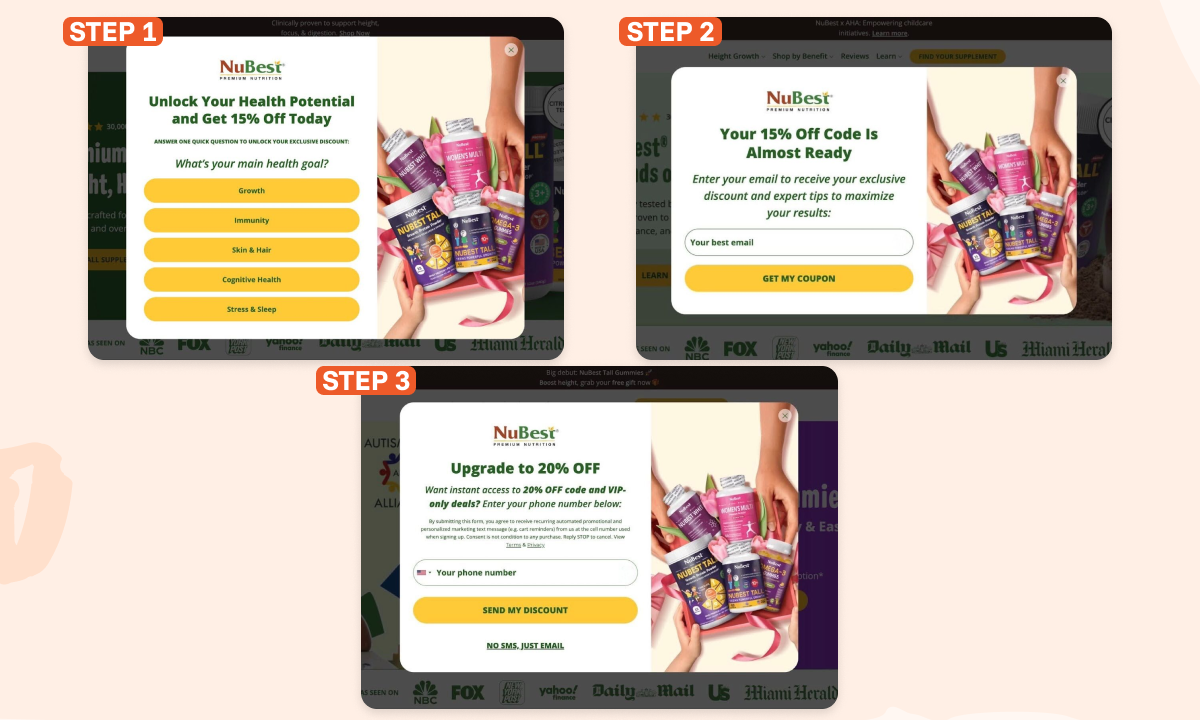
Combined with behavioral triggers like exit intent or time-on-page, this approach improves list quality, enables immediate personalization, and turns early-stage traffic into future revenue.
2. Unexpected shipping costs
Cart abandonment often happens when shoppers see the final order cost. Unexpected shipping fees, taxes, or minimum thresholds create a gap between the price they expected and the total they actually see.
At this point, the problem isn’t lack of intent, it’s a value mismatch.
When the total feels higher than expected, shoppers hesitate, reconsider the purchase, or leave to compare alternatives. This is especially common when free shipping thresholds are unclear or when customers don’t know how close they are to qualifying.
The biggest mistake many stores make is revealing these costs too late in the journey.
The CRO opportunity is to set clear expectations earlier and reinforce the value before checkout.
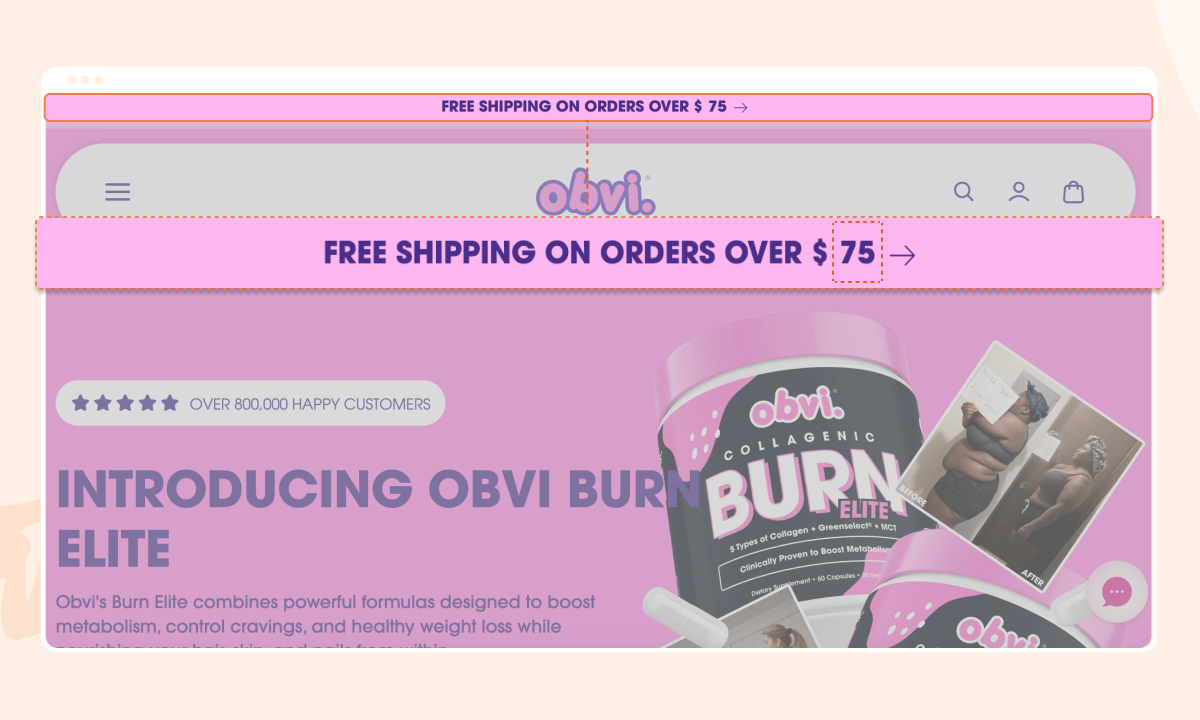
The shipping bar above clearly shows customers how much they need to spend to qualify for free shipping, motivating them to increase their cart value.
From a CRO perspective, it helps reduce cart abandonment by providing transparency on shipping costs early in the process, encouraging customers to complete their purchase.
3. Last-minute hesitation
One of the biggest revenue leaks in Shopify stores happens at the final step of the purchase journey. The product is selected, the cart is full, and purchase intent is high—yet they still bail.
Most brands try to recover these exits with discounts. This may bring some shoppers back, but it creates a long-term problem: customers learn that leaving the site leads to a better offer.
Over time, this erodes margins and shifts behavior. Abandonment becomes a strategy, and full-price conversions decline.
A more effective approach is to fix the hesitation instead of rewarding it.
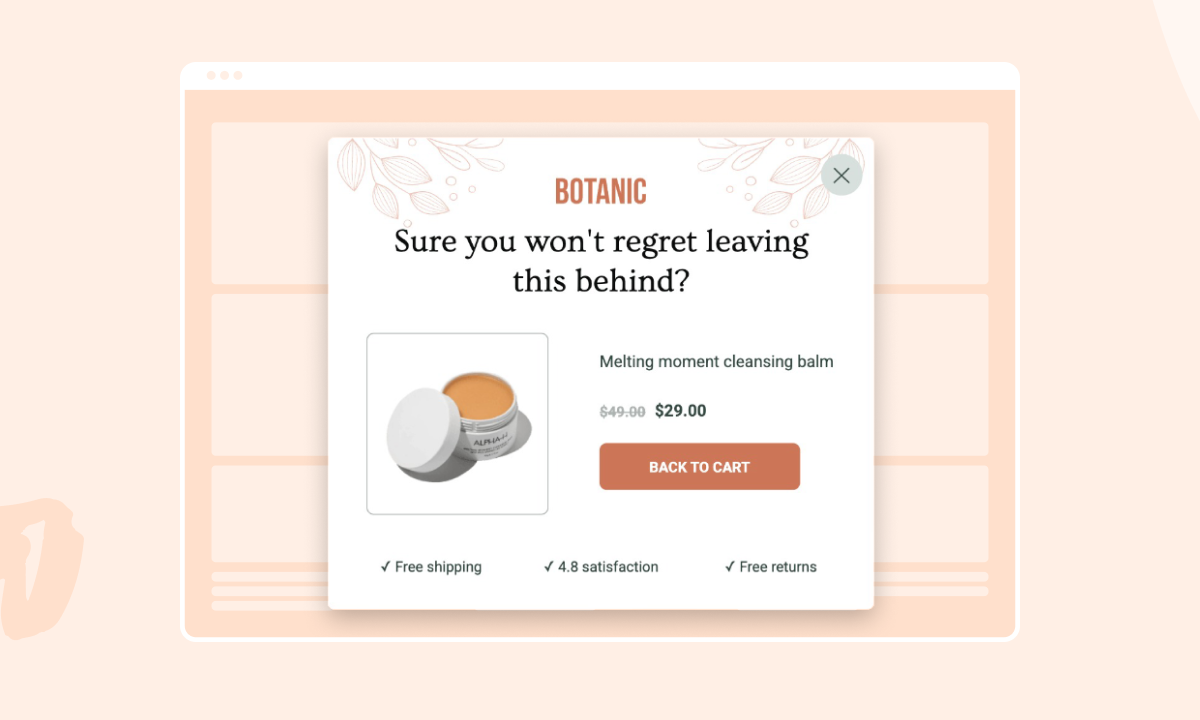
Exit-intent messages do this best when they focus on reassurance, not incentives. At the moment a shopper is about to leave, they can:
- remind them of the items in their cart
- clarify delivery costs or timing
- highlight return policies
- reinforce payment security and trust
By removing uncertainty instead of lowering the price, brands can reduce abandonment, protect margins, and recover revenue without training customers to wait for discounts.
4. The product isn’t the right fit
Not every visitor lands on the right product. But in many cases, the problem isn’t product availability—it’s discovery friction.
When shoppers can’t quickly find a suitable alternative, they leave, even if your store has exactly what they need. This usually happens in a few different scenarios:
- product pages don’t guide them to the next step
- the number of options feels overwhelming
- the shopper isn’t sure which option fits their needs
The CRO goal here is to reduce decision effort and guide the next choice.
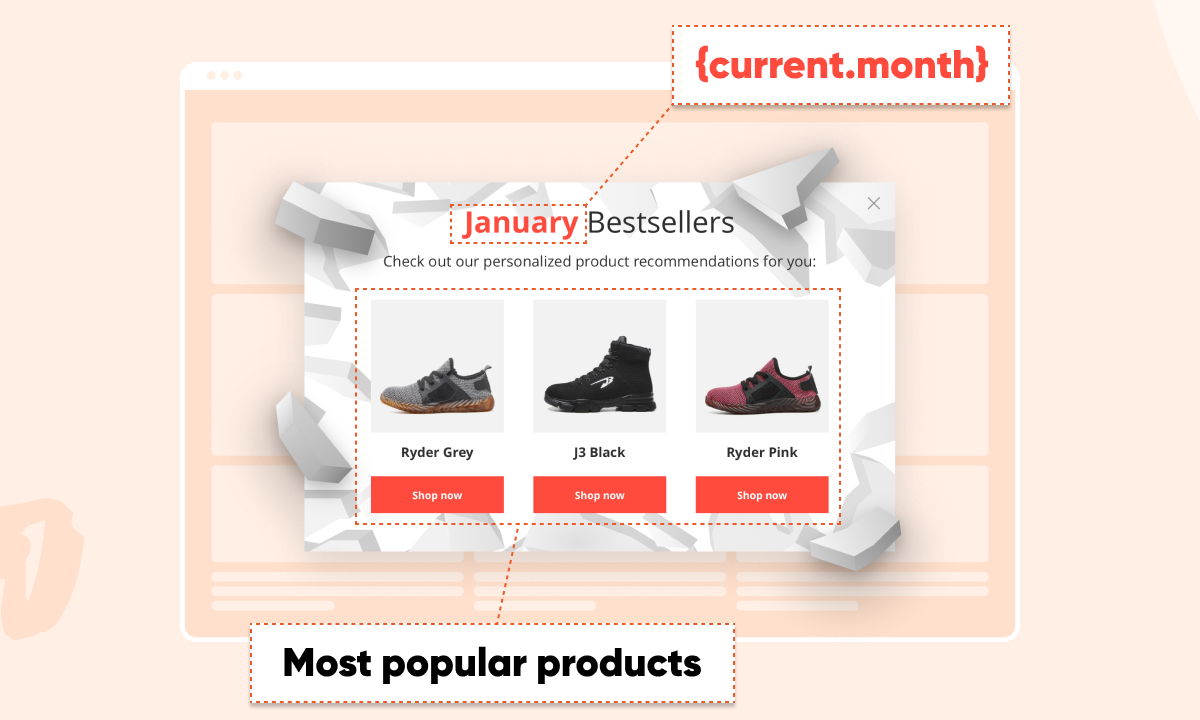
Personalized product recommendations—based on browsing behavior, best sellers, or similar items—bring relevant alternatives directly into the decision flow. Instead of making shoppers search, the store shows the next logical choice.
By reducing search effort and decision friction, recommendations keep shoppers engaged, prevent them from leaving to explore other options, and help them move to purchase faster.
5. The decision never becomes clear
Many Shopify visitors now land directly on product pages from Performance Max and dynamic ads. In these cases, the product page isn’t just a step in the journey, it’s the first and only impression of your brand.
When the value isn’t clear immediately, the decision stops.
The problem is that most product pages describe the product instead of explaining the outcome. Shoppers don’t need more specifications. They need quick answers to three questions:
- Who is this for?
- Why does it matter?
- What result can I expect?
High-converting product pages focus on clarity. They lead with a benefit-driven headline, present key advantages in a scannable format, and use visuals that help shoppers imagine real-life use.
The real challenge is scale. Optimizing a few pages manually is possible; maintaining clarity across hundreds or thousands of products is not.
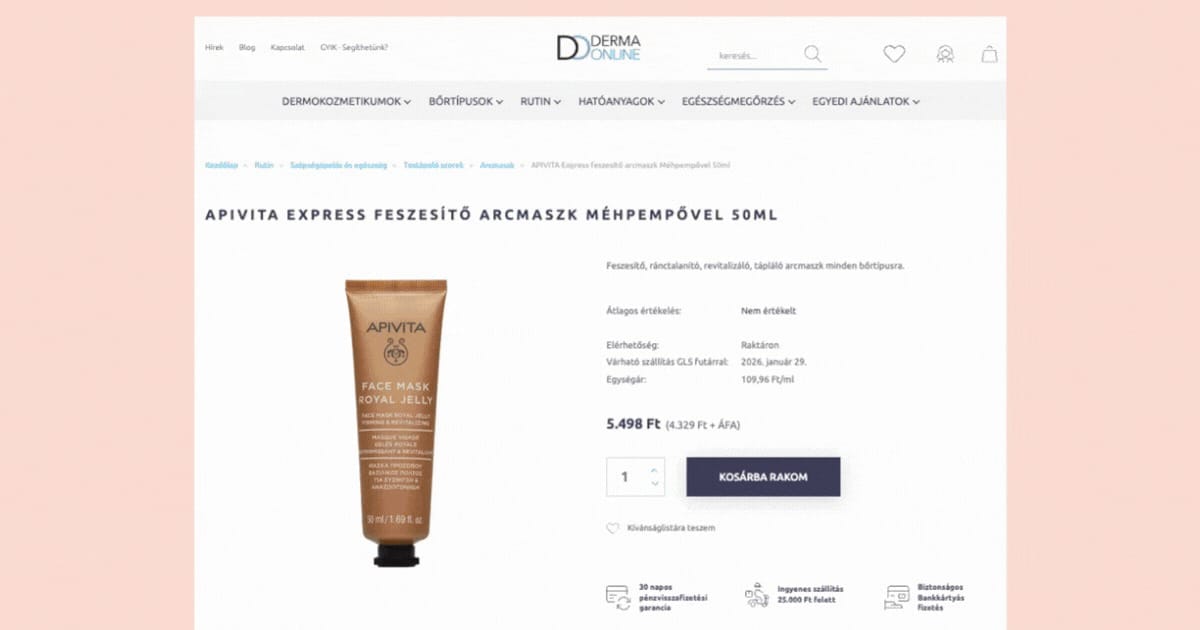
AI-driven optimization makes this scalable by generating benefit-focused messaging and contextual visuals for each product. Instead of static descriptions, product pages become decision-support experiences that help shoppers understand the value and move forward with confidence.
Conversion rate optimization FAQ
What is conversion rate optimization?
CRO is the process of improving the percentage of website visitors who complete a desired action, such as making a purchase or signing up for a newsletter. By reducing friction and building decision confidence, CRO helps increase conversions without needing to increase traffic.
What does "optimize conversion" mean?
"Optimize conversion" means improving the process by which website visitors take a desired action, such as making a purchase, signing up, or clicking a button. It involves enhancing website elements like design, copy, page structure, and offers to make it easier and more compelling for visitors to convert, ultimately increasing the percentage of visitors who complete the desired action.
How to calculate your conversion rate?
The conversion rate (CVR) is calculated by dividing the total number of conversions by the total number of visitors (or sessions) within a specific time period, and then multiplying the result by 100 to express it as a percentage.
What is the average conversion rate?
The average conversion rate varies across industries, but for most ecommerce stores, the typical conversion rate ranges between 2% to 3%. This means that for every 100 visitors to your site, around 2 to 3 will complete a desired action, such as making a purchase.
How can AI help in conversion rate optimization?
AI helps optimize conversions by personalizing the user experience, automating A/B testing, and using behavioral analytics to identify and fix friction points. It can provide personalized product recommendations, optimize product pages, and predict customer behavior to improve decision-making and increase conversions.
Wrapping up
These five friction points aren’t just isolated problems; they’re the moments where buying decisions either move forward or stop.
When visitors aren’t ready, don’t see enough value, hesitate at the last step, struggle to find the right option, or lack clarity, the purchase simply doesn’t happen. Fixing these moments transforms your store from a product catalog into a decision-support experience.
That’s the real role of CRO: not chasing quick wins or isolated success, but systematically removing friction and building confidence throughout the customer journey.
Growth rarely comes from more traffic—it comes from helping more visitors make decisions.When friction is reduced, the impact shows where it matters most: more completed orders, higher cart values, and more revenue from the traffic you already have.
All of the CRO use cases mentioned above can be implemented with OptiMonk.
If you want to see them in action, get started with OptiMonk’s AI Wizard, which helps you generate conversion-focused, on-brand CRO campaigns based on your goals and context.
About the author
Anna Varga is a Junior Marketer at OptiMonk, where she plays a key role in helping online businesses grow through effective content marketing and conversion rate optimization. With a focus on creating user-centric content, Anna simplifies complex solutions to support conversion goals. As a junior professional, she is committed to improving user experiences and delivering impactful results through strategically crafted, engaging narratives.


